
125,00€ 112,50€
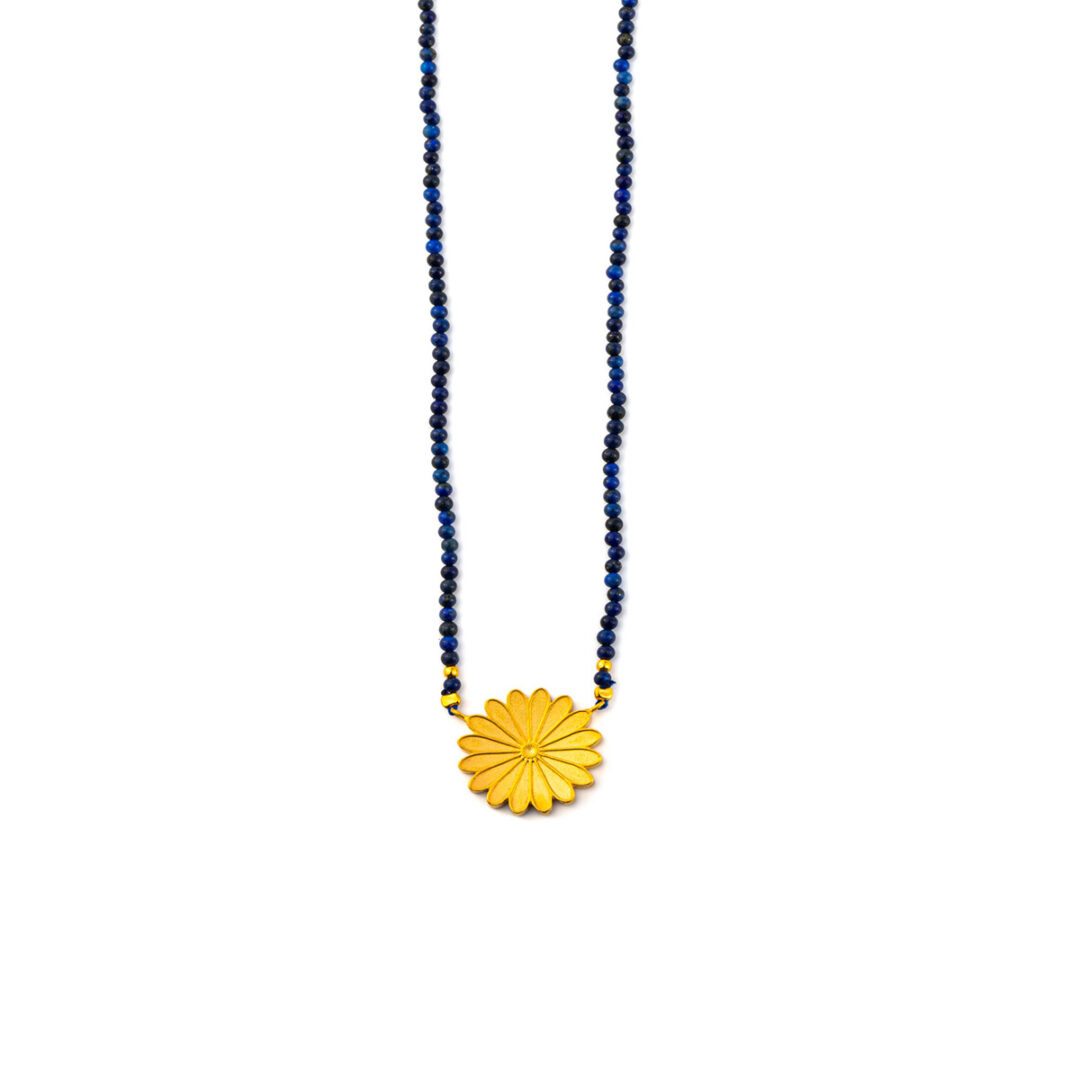
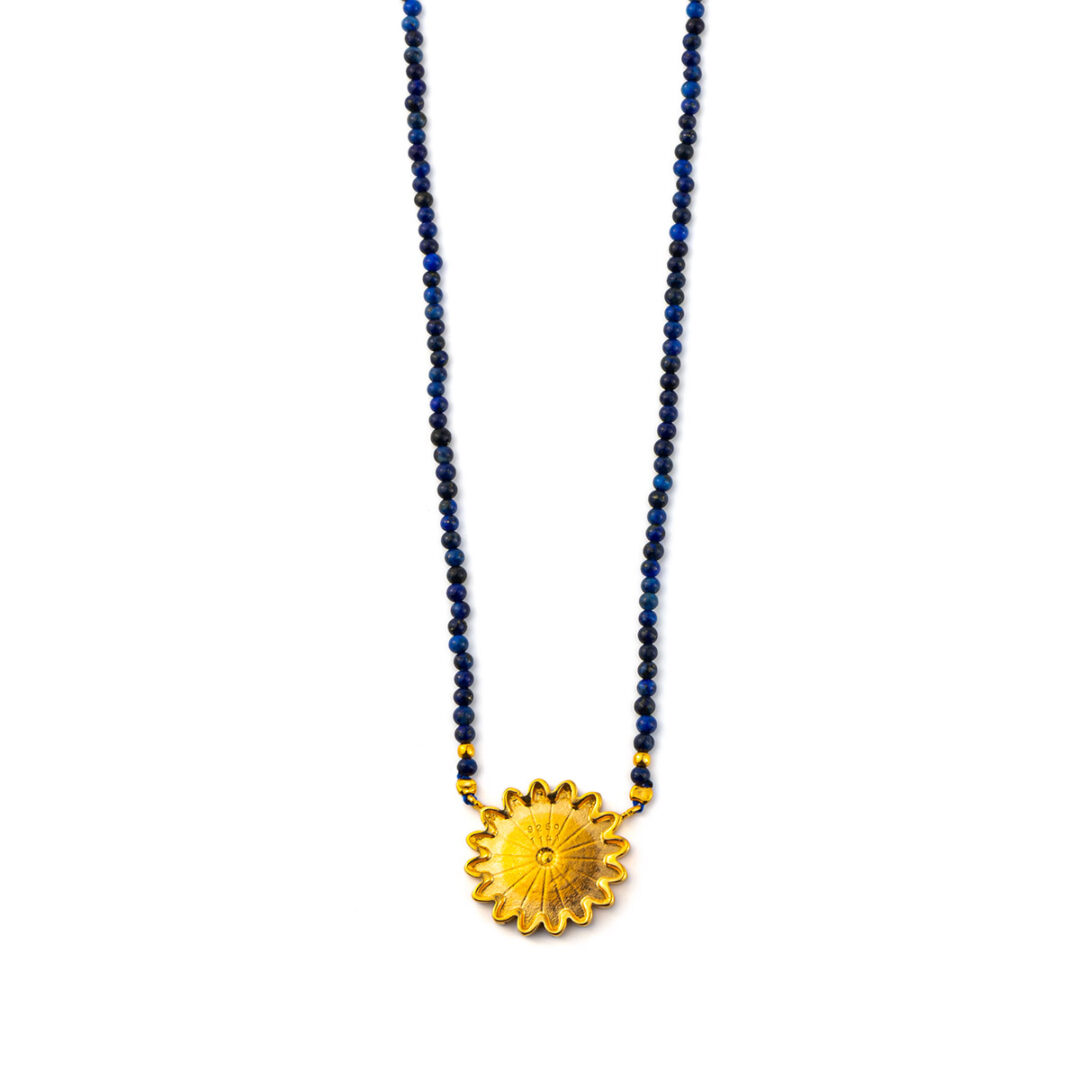
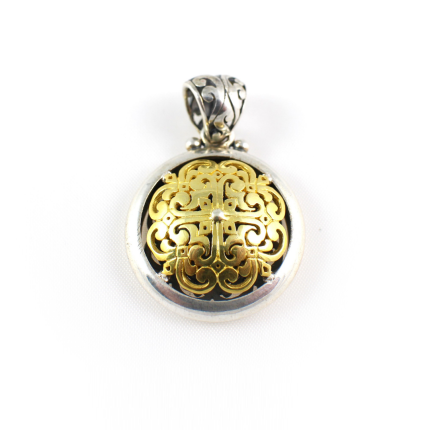
The necklace is decorated with a rosette flower.
Made in 925⁰ sterling silver and gold plated.
Handmade item.
Design inspired by the incredible beauty of byzantine and greek art.
Explore Heritage Collection
Mycenaean Rosette (Rodakas)
The rosette (known as “rodakas” in Greek) is a motif that was prevalent across Mesopotamia, Egypt, and other ancient civilizations. It also appears frequently in Mycenaean Greece, especially in jewelry, as well as in architecture and pottery dating back to around 1500 BC.
Mycenaean rosettes typically feature 6, 8, or 12 petals. Made from gold, these intricate designs were commonly used to adorn clothing for both men and women, sewn directly into the fabric. They also appeared in belts, necklaces, and were occasionally used as single decorative elements in earrings and rings.
The rosette motif is believed to symbolize a wild rose, a flower frequently depicted in frescoes from the era. Its presence in garlands for celebrations, its use in rituals as offerings placed in women’s hands, and references in the Linear B tablets of Knossos to a “month of the roses” all suggest that the rosette carried a symbolic meaning. These factors point to the idea that the rosette motif held religious and cultural significance in Mycenaean society, possibly linked to rites of renewal or celebration.
1 in stock (can be backordered)
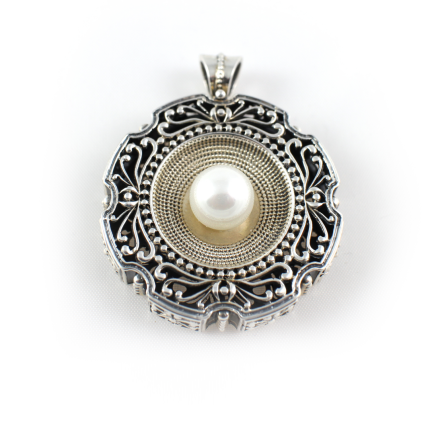
Rosette Necklace with stones – 925 Sterling Silver
The necklace is decorated with a rosette flower.
Made in 925⁰ sterling silver and gold plated.
Handmade item.
Design inspired by the incredible beauty of byzantine and greek art.
Explore Heritage Collection
Mycenaean Rosette (Rodakas)
The rosette (known as “rodakas” in Greek) is a motif that was prevalent across Mesopotamia, Egypt, and other ancient civilizations. It also appears frequently in Mycenaean Greece, especially in jewelry, as well as in architecture and pottery dating back to around 1500 BC.
Mycenaean rosettes typically feature 6, 8, or 12 petals. Made from gold, these intricate designs were commonly used to adorn clothing for both men and women, sewn directly into the fabric. They also appeared in belts, necklaces, and were occasionally used as single decorative elements in earrings and rings.
The rosette motif is believed to symbolize a wild rose, a flower frequently depicted in frescoes from the era. Its presence in garlands for celebrations, its use in rituals as offerings placed in women’s hands, and references in the Linear B tablets of Knossos to a “month of the roses” all suggest that the rosette carried a symbolic meaning. These factors point to the idea that the rosette motif held religious and cultural significance in Mycenaean society, possibly linked to rites of renewal or celebration.
| Design | |
|---|---|
| Gender | |
| Length | |
| Material | |
| Weight | |
| Width |
Only logged in customers who have purchased this product may leave a review.
Reviews
There are no reviews yet.