
778,00€ 700,20€
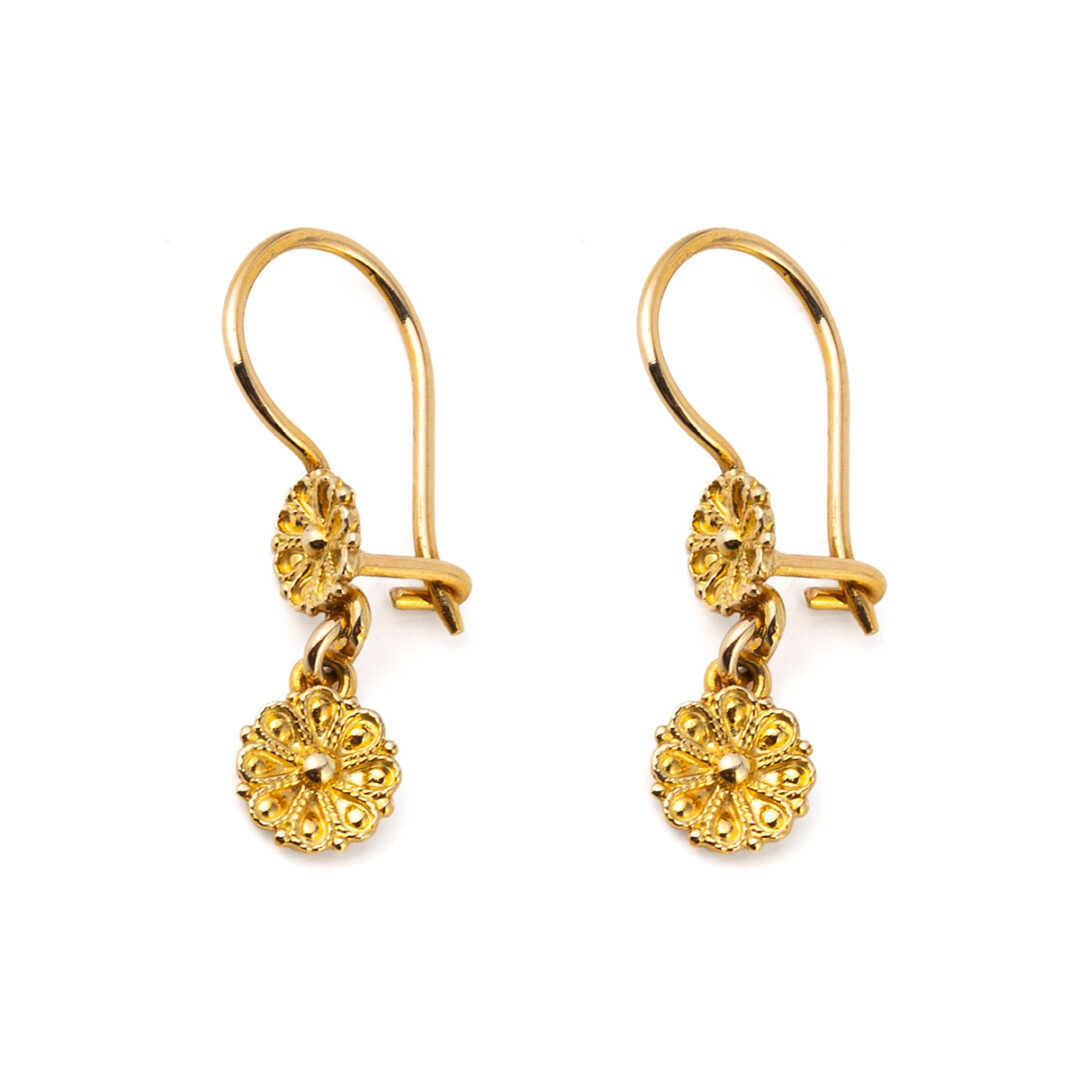
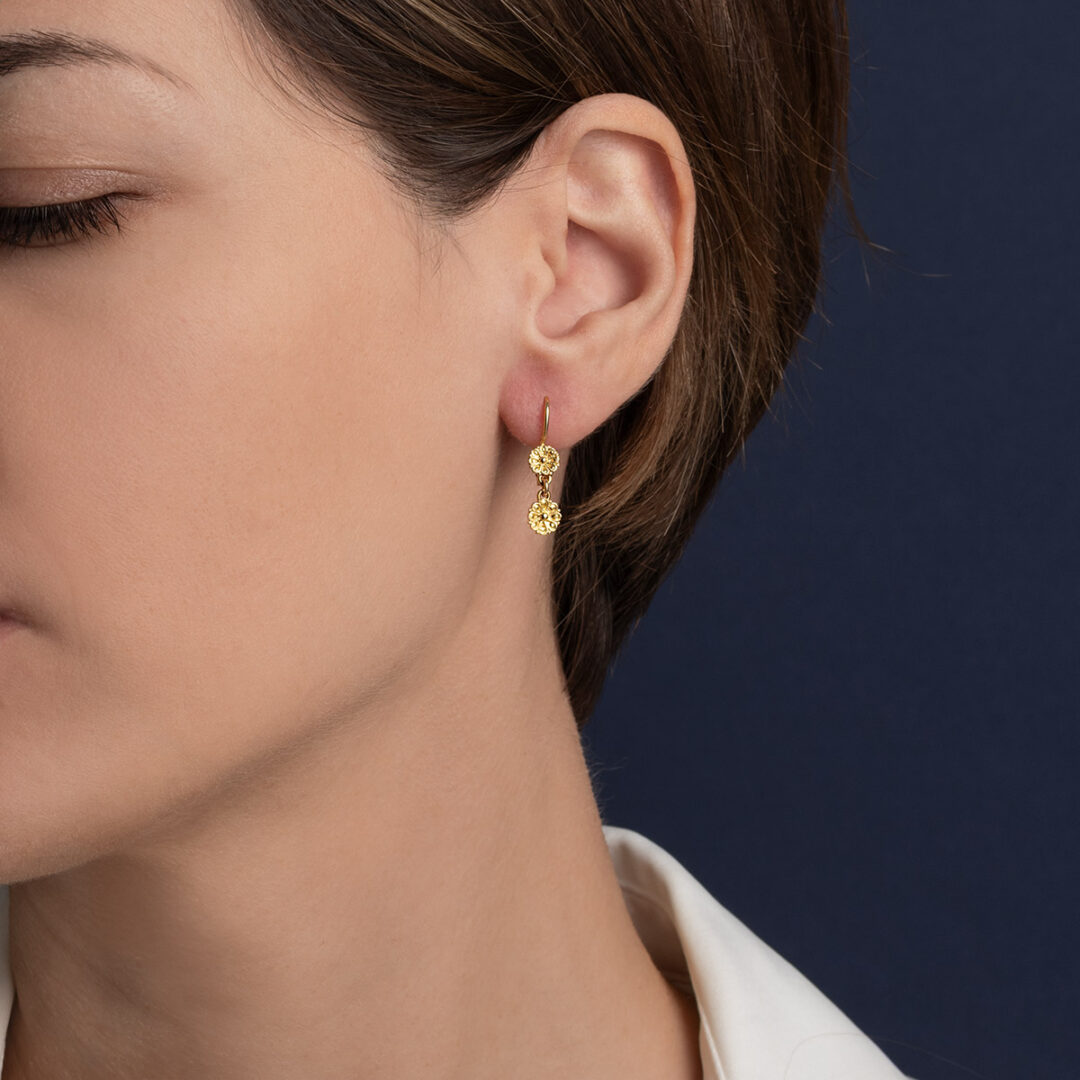
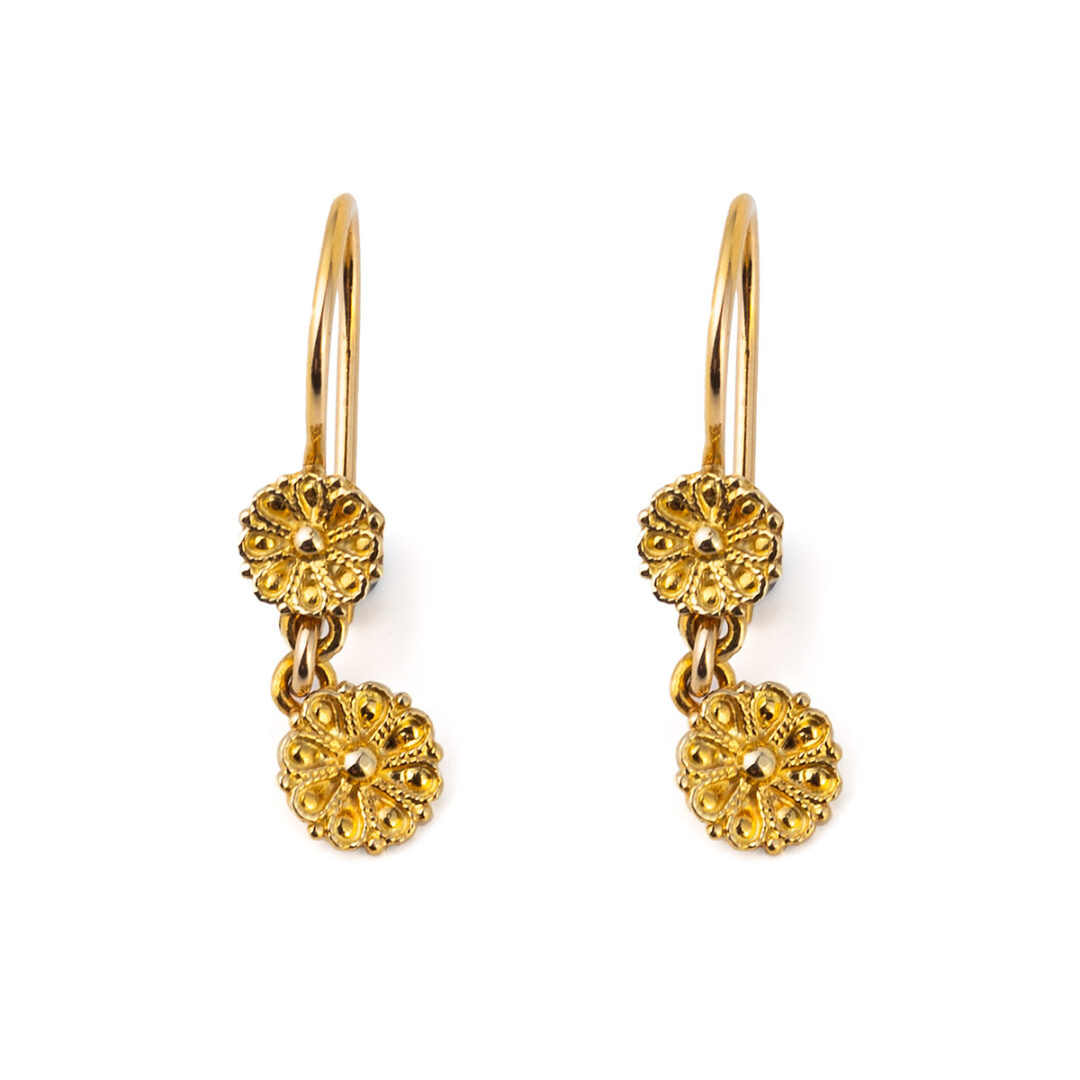
Byzantine earrings with the shape of a flower rosette.
Handmade with great attention to detail. Inspired by Byzantine art.
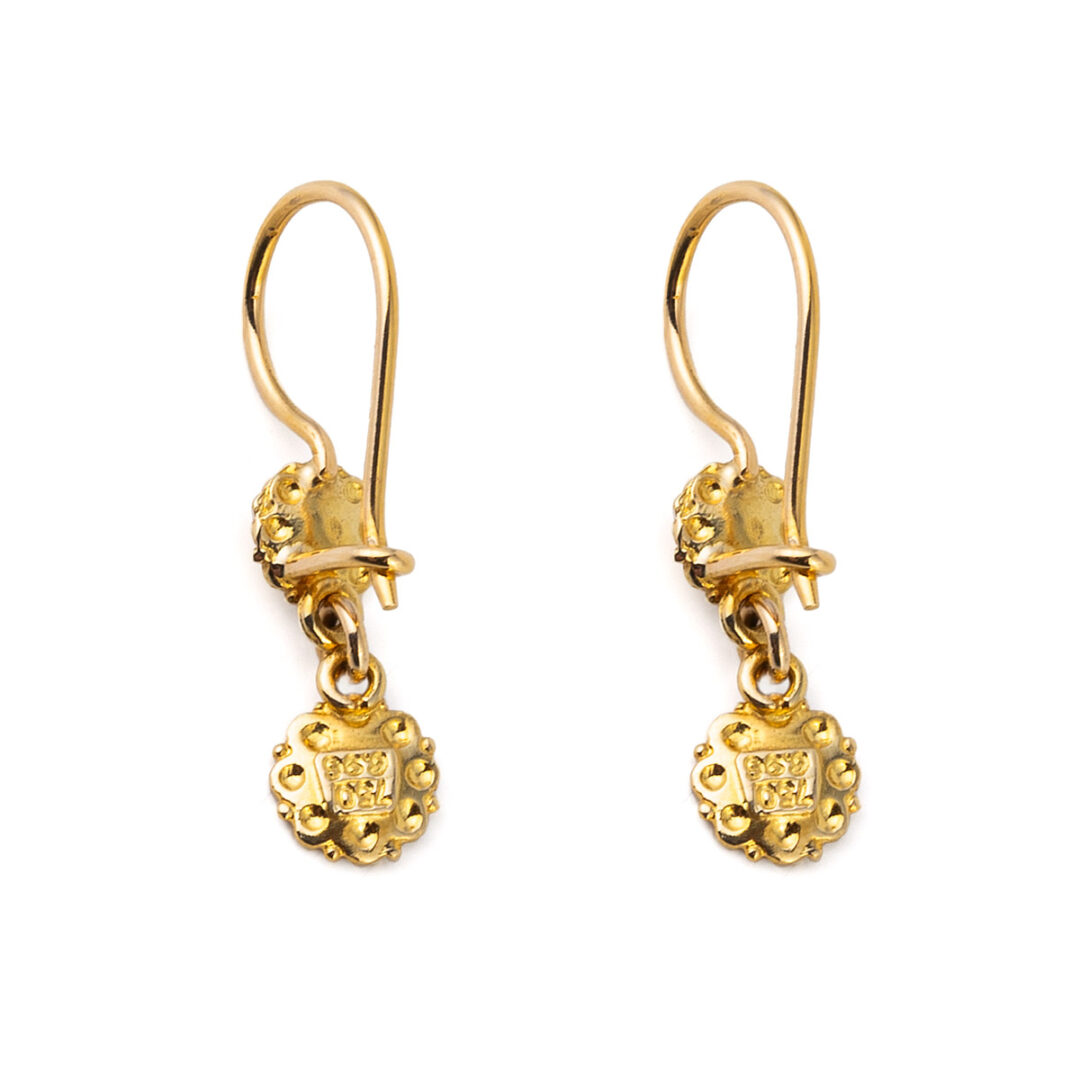
Made in 18k gold.
Handmade item.
Explore Byzantine Collection
Rosette flower
The rosette (rose) is a timeless jewel, symbol, and amulet. The origin of the term is the Greek word for rose – rodon (ρόδον). Its use began in the Mycenaean era and continues as far as the 2nd millennium BC. The Mycenaean Rosette is a motif that was widespread throughout Mesopotamia, Egypt, Greece, and other ancient civilizations. It is inspired by a Mycenaean rosette bead, found at Mycenae, dated to 1400-1300 B.C. The rosette was used extensively in ancient Greek Mycenaean jewels, in architecture, pottery, and sculptures from 1500 BC. Mycenaean rosettes usually had 6 or 8 or 12 leaves, and sixteen leaves during the Macedonian Dynasty. Such details as the rodax shape and the number of leaves tend to vary with the era or beliefs. The rosettes were used to decorate the clothes, belts, and wreaths of the Kings. The number of leaves had a symbolic character each time. The four elements of nature (wind, earth, fire, water), the seven wonders of the ancient world or the twelve gods of ancient Greeks, and the world domination and radiance of the Kings of Macedonia. They were signs of beauty, purity, eugenics, worship, and power. Rosette or Rodax was probably the most popular and favorite decorative element in Mycenaean era, classical antiquity and Byzantine times.
18K Gold Byzantine Rosette Earrings
Byzantine earrings have the shape of a flower rosette.
Handmade with great attention to detail. Inspired by Byzantine art.
Made in 18k gold.
Handmade item.
Explore Byzantine Collection
Rosette flower
The rosette (rose) is a timeless jewel, symbol, and amulet. The origin of the term is the Greek word for rose – rodon (ρόδον). Its use began in the Mycenaean era and continues as far as the 2nd millennium BC. The Mycenaean Rosette is a motif that was widespread throughout Mesopotamia, Egypt, Greece, and other ancient civilizations. It is inspired by a Mycenaean rosette bead, found at Mycenae, dated to 1400-1300 B.C. The rosette was used extensively in ancient Greek Mycenaean jewels, in architecture, pottery, and sculptures from 1500 BC. Mycenaean rosettes usually had 6 or 8 or 12 leaves, and sixteen leaves during the Macedonian Dynasty. Such details as the rodax shape and the number of leaves tend to vary with the era or beliefs. The rosettes were used to decorate the clothes, belts, and wreaths of the Kings. The number of leaves had a symbolic character each time. The four elements of nature (wind, earth, fire, water), the seven wonders of the ancient world or the twelve gods of ancient Greeks, and the world domination and radiance of the Kings of Macedonia. They were signs of beauty, purity, eugenics, worship, and power. Rosette or Rodax was probably the most popular and favorite decorative element in Mycenaean era, classical antiquity and Byzantine times.
| Material | |
|---|---|
| Kt | |
| Width | |
| Height | |
| Weight | |
| Gender |
Only logged in customers who have purchased this product may leave a review.
Reviews
There are no reviews yet.